Tatra T600 Tatraplan
The Only Fully-Enveloping Mass-Produced Teardrop Car
Text and images : all rights reserved © 2024 www.tatraplan.co.uk
email : contact at margolius.co.uk
News
For body drag coefficients see 'Tatra T600 Tatraplan' page
The Only Fully-Enveloping Mass-Produced Teardrop Car
Text and images : all rights reserved © 2024 www.tatraplan.co.uk
email : contact at margolius.co.uk
News
For body drag coefficients see 'Tatra T600 Tatraplan' page
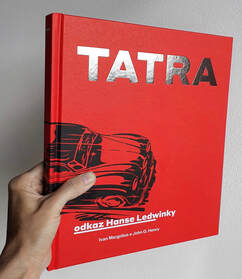
Ivan Margolius a John G. Henry, Tatra – Odkaz Hanse Ledwinky [Tatra – The Legacy of Hans Ledwinka], Argo, Praha, 2020, 232 stran, překlad Pavel Dufek, grafická úprava Jana Vahalíková, ISBN 978-80-257-3066-9, s předmluvou od Normana Fostera, a prologem 'Můj otec' od Ericha Ledwinky, vydáno v srpnu 2020 (Czech translation of the updated 2015 English edition with additional images published in August 2020).
"Kniha, na rozdíl od mnoha jiných na našem trhu, přináší soustředění historických faktů citlivě doplněných méně známými archivními fotografiemi a dokumenty, které doposud nebyly takto uveřejněny. Publikace je zajímavá i jejím grafickým zpracováním . Rozhodně stojí za pečlivé přečtení, ale i pořízení do knihovny nejen milovníky čs. automobilové historie!" Jan Tulis
"Je to nádherná knížka, moc se vám povedla ... Kniha, která čtivým způsobem přináší svědectví o jednom z nejvýznamnějších automobilových konstruktérů historie a také uceleně a čtivě sepsaný příběh automobilky, bez jejíhož odkazu by auta dnes nebyla tím, čím jsou." Eva Srpová, economia.cz
"Všechno co jsem dosud o tatrách četl jakoby bylo stále omezeno železnou oponou. Jste první kdo vývoj tatry zasadil do mezinárodních souvislostí … Jednoduše moc se mi to líbí." Jiří Mewald, redaktor, Motor Journal
"Obsažná reprezentativní publikace bude v knihovně přínosem informací, radostí a oprávněné národní hrdosti." Jan Martof, Motor Journal
"Pro toho, kdo se chce o Tatře a její nesmazatelné stopě v historii světového automobilismu dozvědět to nejdůležitější, a navíc příjemně čtivou formou, je ovšem rudý svazek se stříbrně vyraženým nápisem TATRA velmi dobrou volbou." Kopřivnické noviny, 1/10/2020
"Fabulous book on Tatra has just been published in Czech by Argo, Prague." Ian Willoughby, Radio Prague (Interview in Czech, interview in English)
"Kniha s vynikajícím obrazovým doprovodem, ... je pozoruhodná mnohostranou vyvážeností, ... je podobně elegantní a spolehlivá jako stříbrná Tatra T87." Zdenko Pavelka, Radio Vltava, Český rozhlas, 12/12/2020
"Obdiv k designu legendárních aut značky Tatra, ale i hluboké osobní pohnutky, vedly Ivana Margolia k sepsání publikace Tatra: odkaz Hanse Ledwinky." Blanka Kovaříková, Právo, Praha 22/1/2021
"Samozřejmě, že jde o technickou literaturu, ale o to více oceňuji, že knížka poskytuje neuvěřitelně čtivě psaný vhled do designového přemýšlení Hanse Ledwinky, hlavního konstruktéra československé automobilky založené v roce 1850 ... Oba autoři jsou architekti a jejich společný zájem o inovativní design automobilů vyústil v tuto fascinující studii." Vojtěch Hlavatý, Temple of Speed, 4/2021
"Loved the Tatra book." Lord Foster of Thames Bank
"Kniha, na rozdíl od mnoha jiných na našem trhu, přináší soustředění historických faktů citlivě doplněných méně známými archivními fotografiemi a dokumenty, které doposud nebyly takto uveřejněny. Publikace je zajímavá i jejím grafickým zpracováním . Rozhodně stojí za pečlivé přečtení, ale i pořízení do knihovny nejen milovníky čs. automobilové historie!" Jan Tulis
"Je to nádherná knížka, moc se vám povedla ... Kniha, která čtivým způsobem přináší svědectví o jednom z nejvýznamnějších automobilových konstruktérů historie a také uceleně a čtivě sepsaný příběh automobilky, bez jejíhož odkazu by auta dnes nebyla tím, čím jsou." Eva Srpová, economia.cz
"Všechno co jsem dosud o tatrách četl jakoby bylo stále omezeno železnou oponou. Jste první kdo vývoj tatry zasadil do mezinárodních souvislostí … Jednoduše moc se mi to líbí." Jiří Mewald, redaktor, Motor Journal
"Obsažná reprezentativní publikace bude v knihovně přínosem informací, radostí a oprávněné národní hrdosti." Jan Martof, Motor Journal
"Pro toho, kdo se chce o Tatře a její nesmazatelné stopě v historii světového automobilismu dozvědět to nejdůležitější, a navíc příjemně čtivou formou, je ovšem rudý svazek se stříbrně vyraženým nápisem TATRA velmi dobrou volbou." Kopřivnické noviny, 1/10/2020
"Fabulous book on Tatra has just been published in Czech by Argo, Prague." Ian Willoughby, Radio Prague (Interview in Czech, interview in English)
"Kniha s vynikajícím obrazovým doprovodem, ... je pozoruhodná mnohostranou vyvážeností, ... je podobně elegantní a spolehlivá jako stříbrná Tatra T87." Zdenko Pavelka, Radio Vltava, Český rozhlas, 12/12/2020
"Obdiv k designu legendárních aut značky Tatra, ale i hluboké osobní pohnutky, vedly Ivana Margolia k sepsání publikace Tatra: odkaz Hanse Ledwinky." Blanka Kovaříková, Právo, Praha 22/1/2021
"Samozřejmě, že jde o technickou literaturu, ale o to více oceňuji, že knížka poskytuje neuvěřitelně čtivě psaný vhled do designového přemýšlení Hanse Ledwinky, hlavního konstruktéra československé automobilky založené v roce 1850 ... Oba autoři jsou architekti a jejich společný zájem o inovativní design automobilů vyústil v tuto fascinující studii." Vojtěch Hlavatý, Temple of Speed, 4/2021
"Loved the Tatra book." Lord Foster of Thames Bank
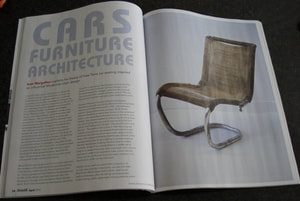
'Cars, Furniture, Architecture': an article on the revolutionary 1926 Tatra T12 cantilever tubular steel seat with folding backrest in The Automobile, April 2016 available directly from theautomobile.co.uk
Also here: www.czechfriends.net/images/NEWSLETTER14_MargoliusArticle_-_Tatra.pdf
and 'Automobily, nábytek, architektura' in Motor Journal (CR) no. 9/2017, pp. 40 - 43 (in Czech)
Also here: www.czechfriends.net/images/NEWSLETTER14_MargoliusArticle_-_Tatra.pdf
and 'Automobily, nábytek, architektura' in Motor Journal (CR) no. 9/2017, pp. 40 - 43 (in Czech)
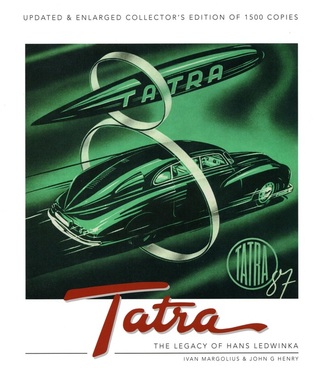
Tatra – The Legacy of Hans Ledwinka, new fully updated and revised collector's edition, Ivan Margolius and John G. Henry, including: foreword by Norman Foster and 'My Father' by Erich Ledwinka, Veloce Publishing, Dorchester, 2015, 250 x 250 format, 224 pages, 326 black & white and colour illustrations, ISBN 978-1-845847-99-9.
All 1500 hardback copies sold, revised paperback edition ISBN 978-1787116-30-6 was released on November 26, 2019.
Available in the Czech Republic from www.techbooks.cz
Czech edition published in August 2020.
"I had great pleasure in being part of this book." Norman Foster
"This is a superb 224 page hardback book by Veloce containing 326 historic photographs and some great period colour artwork. Written by the two acknowledged authorities on Ledwinka, this highly recommended book goes into great detail about contemporary work into streamlining by Jaray and others that influenced Tatra and outlines other radical auto technologies being espoused in the Twenties and Thirties throughout Europe and beyond." Brian Palmer
"'Book of the Week' : This is an expansive account of the contribution made by the Czech manufacturer Tatra and the company's chief designer, Hans Ledwinka, to modern motoring ... Tatra is respected by engineers and designers alike, with prominent architect Norman Foster, himself a T87 owner, providing a foreword. The book is comprehensively illustrated with many fascinating photographs, illustrations, period marketing materials and factory images." Classic Car Weekly, 24/02/2016
"This book provides an in-depth history of the third oldest car company, and the achievements of its prewar driving force ... the large format, greatly improved reproduction and the many new images, particularly the appended period brochures, will make it difficult to resist adding this one to your bookshelf ... the book remains a fine tribute to a remarkable engineer." The Automobile, January 2016
"Suited to historians as much as car fans, this insightful look into the story of Czech auto maker Tatra and the legacy of car design legend Hans Ledwinka is a fine read ... This is a truly entertaining book." Auto Express, January 2016
"The book expands mainly through a greatly enlarged image portion bringing the whole story, and of course, goes on until today." Austro Classic, January 2016
"A testament to the Czech Republic's greatest marque and its talented engineer." Classic Cars, February 2016
"The authors present a new perspective on one of the most important automotive designers, Hans Ledwinka, and his impact on the development of Tatra ... the authors have managed to create a book that will captivate many who are interested in this topic, not only from the dedicated public abroad but also in the Czech Republic." Motor Journal (CZ), February 2016
"A book that any Tatra lover should have." Klassiek & Techniek, March 2016
"This brilliant second edition pays further tribute to Ledwinka and reinforces his position amongst the world's great designers. Nice reference work from Veloce." Tool Kit Car, June 2016
"An important, interesting and well produced book." Classic Driver, July 2016
"This book focuses on Ledwinka's Tatra car designs, which unfortunately have been all too often forgotten." AutoClassic, August 2016
"With their sculpted curves and scent of Italian futurism, Tatra cars first turned heads in the 1930s. They've been seducing designers ever since ... a fine book ... a fascinating account of a great marque." Hugh Pearman, The RIBA Journal, September 2016
"This authoritative book will provide hours of entertainment and education to any automotive enthusiast." Classics Monthly, December 2019
"The book content is ... excellent." The Automobile, January 2020
"This informative book covers the full history of the marque from its founding right up to the final road cars produced in
1999 – although Tatra still exists as a truck-building company. The authors also lay down a convincing argument that
Ledwinka played a far more important role in the development of the automobile, something hard to disagree with. Fully
updated, this new edition features additional information and photographs plus insightful forewords from British architect
and Tatra T87 owner Norman Foster and Erich Ledwinka, Hans Ledwinka’s son." NZ Classic Driver, April 2020
"The book's appeal is across the board and will suit Tatra fans, automotive historians and casual readers, alike." Truck Kit Custom, April 2020
"A beautiful tribute to the genius Ledwinka and the revolutionary Tatra has become a must!" AutoTaal.be
"The Tatra brand may be gone, but the memories persist of the outstanding cars of this Czech marque and with them also lives the significant man who designed these vehicles : Hans Ledwinka. This book allows many insights into the genius of the design and progressiveness of constructions ...The work is extensively illustrated and impresses especially by the historical detail images that bring the reader closer to the very early Tatras." Zwischengas.de
"Beautifully designed ... What distinguishes this book is its scope ... The book has a depth and completeness ... This fascinating book deserves a place on the bookshelf of anyone who has an interest in automotive history and fine engineering." Speedreaders.info
"Margolius and Henry fill a gap in car history with this book ... this book is a 'must have' for those interested in the history of car design." CarArtSpot.com
"Absolutely fantastic. Brilliant job." A reader's comment.
Interview with Ivan Margolius
All 1500 hardback copies sold, revised paperback edition ISBN 978-1787116-30-6 was released on November 26, 2019.
Available in the Czech Republic from www.techbooks.cz
Czech edition published in August 2020.
"I had great pleasure in being part of this book." Norman Foster
"This is a superb 224 page hardback book by Veloce containing 326 historic photographs and some great period colour artwork. Written by the two acknowledged authorities on Ledwinka, this highly recommended book goes into great detail about contemporary work into streamlining by Jaray and others that influenced Tatra and outlines other radical auto technologies being espoused in the Twenties and Thirties throughout Europe and beyond." Brian Palmer
"'Book of the Week' : This is an expansive account of the contribution made by the Czech manufacturer Tatra and the company's chief designer, Hans Ledwinka, to modern motoring ... Tatra is respected by engineers and designers alike, with prominent architect Norman Foster, himself a T87 owner, providing a foreword. The book is comprehensively illustrated with many fascinating photographs, illustrations, period marketing materials and factory images." Classic Car Weekly, 24/02/2016
"This book provides an in-depth history of the third oldest car company, and the achievements of its prewar driving force ... the large format, greatly improved reproduction and the many new images, particularly the appended period brochures, will make it difficult to resist adding this one to your bookshelf ... the book remains a fine tribute to a remarkable engineer." The Automobile, January 2016
"Suited to historians as much as car fans, this insightful look into the story of Czech auto maker Tatra and the legacy of car design legend Hans Ledwinka is a fine read ... This is a truly entertaining book." Auto Express, January 2016
"The book expands mainly through a greatly enlarged image portion bringing the whole story, and of course, goes on until today." Austro Classic, January 2016
"A testament to the Czech Republic's greatest marque and its talented engineer." Classic Cars, February 2016
"The authors present a new perspective on one of the most important automotive designers, Hans Ledwinka, and his impact on the development of Tatra ... the authors have managed to create a book that will captivate many who are interested in this topic, not only from the dedicated public abroad but also in the Czech Republic." Motor Journal (CZ), February 2016
"A book that any Tatra lover should have." Klassiek & Techniek, March 2016
"This brilliant second edition pays further tribute to Ledwinka and reinforces his position amongst the world's great designers. Nice reference work from Veloce." Tool Kit Car, June 2016
"An important, interesting and well produced book." Classic Driver, July 2016
"This book focuses on Ledwinka's Tatra car designs, which unfortunately have been all too often forgotten." AutoClassic, August 2016
"With their sculpted curves and scent of Italian futurism, Tatra cars first turned heads in the 1930s. They've been seducing designers ever since ... a fine book ... a fascinating account of a great marque." Hugh Pearman, The RIBA Journal, September 2016
"This authoritative book will provide hours of entertainment and education to any automotive enthusiast." Classics Monthly, December 2019
"The book content is ... excellent." The Automobile, January 2020
"This informative book covers the full history of the marque from its founding right up to the final road cars produced in
1999 – although Tatra still exists as a truck-building company. The authors also lay down a convincing argument that
Ledwinka played a far more important role in the development of the automobile, something hard to disagree with. Fully
updated, this new edition features additional information and photographs plus insightful forewords from British architect
and Tatra T87 owner Norman Foster and Erich Ledwinka, Hans Ledwinka’s son." NZ Classic Driver, April 2020
"The book's appeal is across the board and will suit Tatra fans, automotive historians and casual readers, alike." Truck Kit Custom, April 2020
"A beautiful tribute to the genius Ledwinka and the revolutionary Tatra has become a must!" AutoTaal.be
"The Tatra brand may be gone, but the memories persist of the outstanding cars of this Czech marque and with them also lives the significant man who designed these vehicles : Hans Ledwinka. This book allows many insights into the genius of the design and progressiveness of constructions ...The work is extensively illustrated and impresses especially by the historical detail images that bring the reader closer to the very early Tatras." Zwischengas.de
"Beautifully designed ... What distinguishes this book is its scope ... The book has a depth and completeness ... This fascinating book deserves a place on the bookshelf of anyone who has an interest in automotive history and fine engineering." Speedreaders.info
"Margolius and Henry fill a gap in car history with this book ... this book is a 'must have' for those interested in the history of car design." CarArtSpot.com
"Absolutely fantastic. Brilliant job." A reader's comment.
Interview with Ivan Margolius
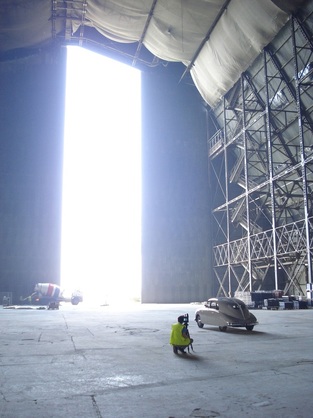
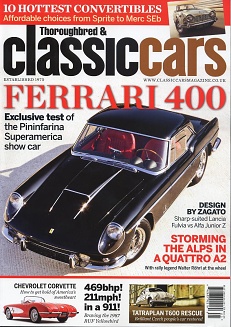
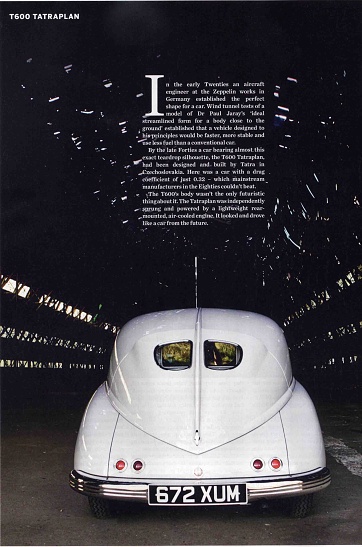
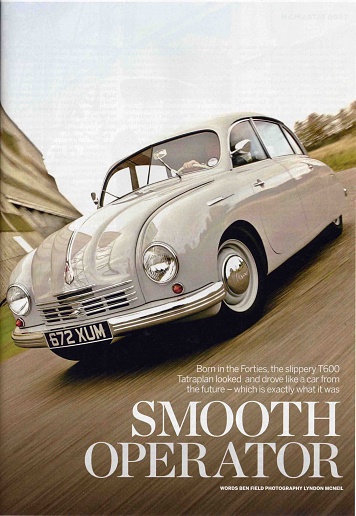
CLASSIC CARS magazine May 2010 issue with a feature article on the Tatraplan